A guide to the centre, lake and mountain routes
Lucerne
Lucerne keeps the railway station, old town and lake within a few minutes of one another. Its boats and mountain railways extend the same compact logic far beyond the streets.
Walk first. KKL, Sammlung Rosengart, Kapellbrücke and the Reuss show how quickly the city fits together. Then let the transport system take over. It carries you from lunch beside the river to a hilltop drink, and from the lake pier to Pilatus or Bürgenstock.
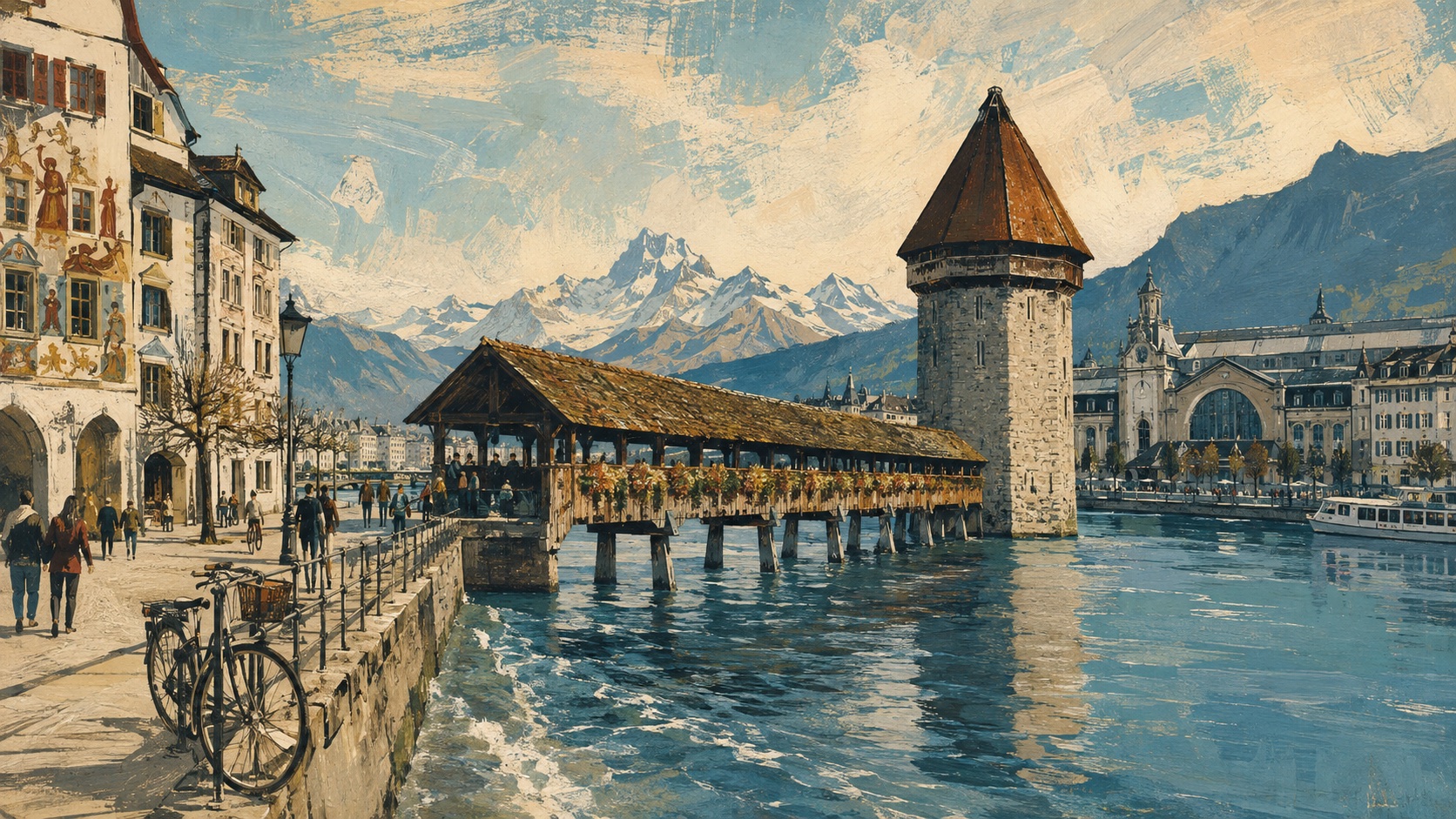
The first afternoon stays on foot
Three stops in the centre
A war memorial, a private art collection and a concert hall sit within a compact route. Together they explain more about Lucerne than another circuit of the old town.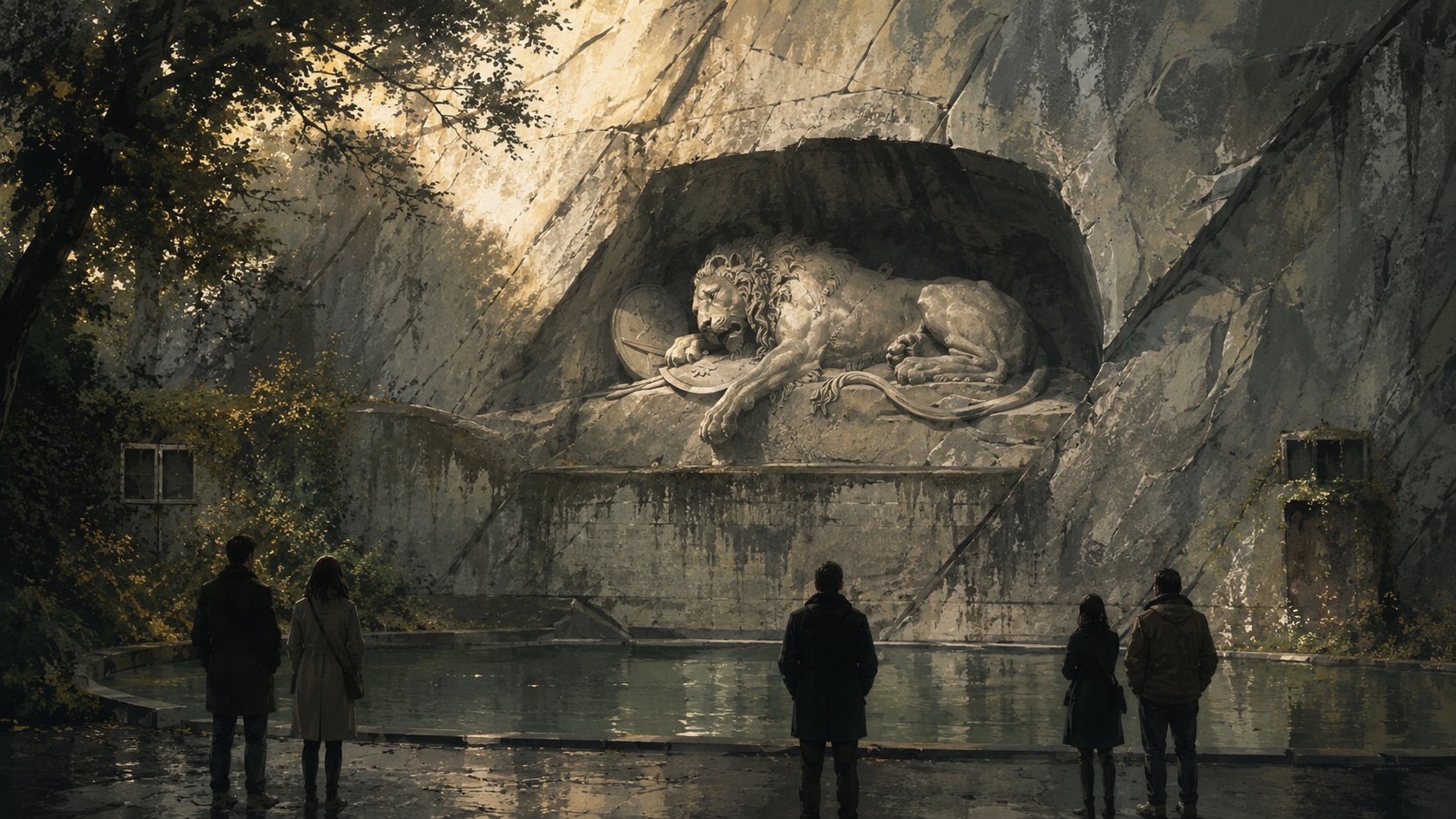 Lion MonumentRead the history before the crowd moves on
Karl Pfyffer von Altishofen commissioned the monument for fellow Swiss Guards killed while defending the Tuileries Palace in Paris on 10 August 1792. Bertel Thorvaldsen designed it; Lukas Ahorn carved the ten-by-six-metre lion directly into the sandstone cliff.
The dying animal turns mercenary service, loyalty and defeat into a public image of Swiss virtue. Around 1.4 million people visit each year, so the setting can disappear behind the crowd. Wait beside the pond after a group leaves and read the inscription, “Helvetiorum Fidei ac Virtuti”: to the loyalty and courage of the Swiss.
 Sammlung RosengartSee Picasso and Klee at a human scale
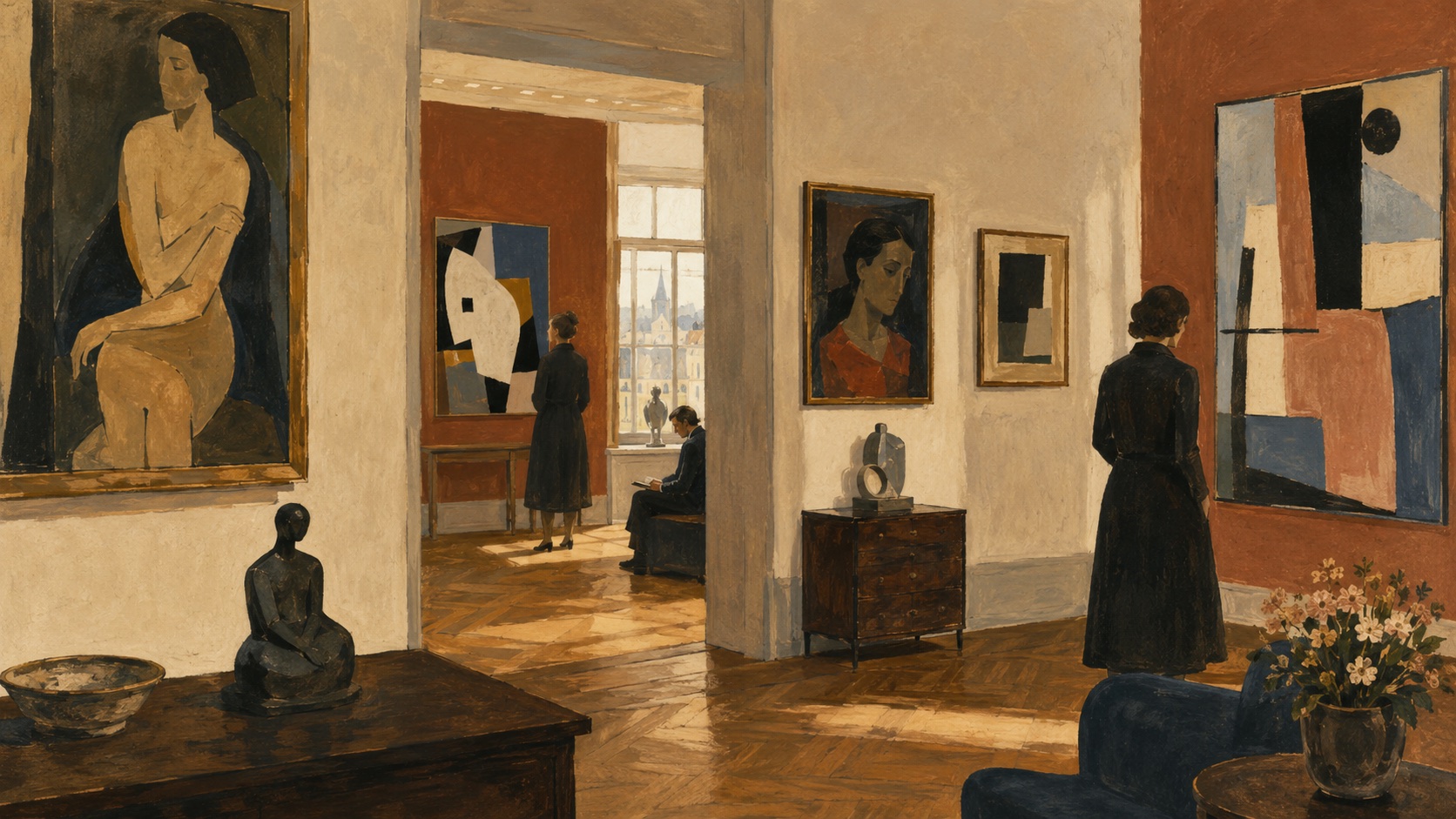
Siegfried Rosengart and his daughter Angela assembled more than 300 works of Impressionism and Classical Modernism. The strongest holdings are unusually concentrated: 125 works by Paul Klee and a chronological Picasso presentation covering 1938 to 1969.
Picasso painted Angela Rosengart five times. Those portraits keep the collector visible inside the collection and give the museum its personal scale. Picasso occupies the ground floor, Klee the basement, and further modernists the first floor. Roger Diener converted the former 1924 Swiss National Bank building for the museum, which opened in 2002.
 KKL LuzernWalk through KKL even without a concert ticket
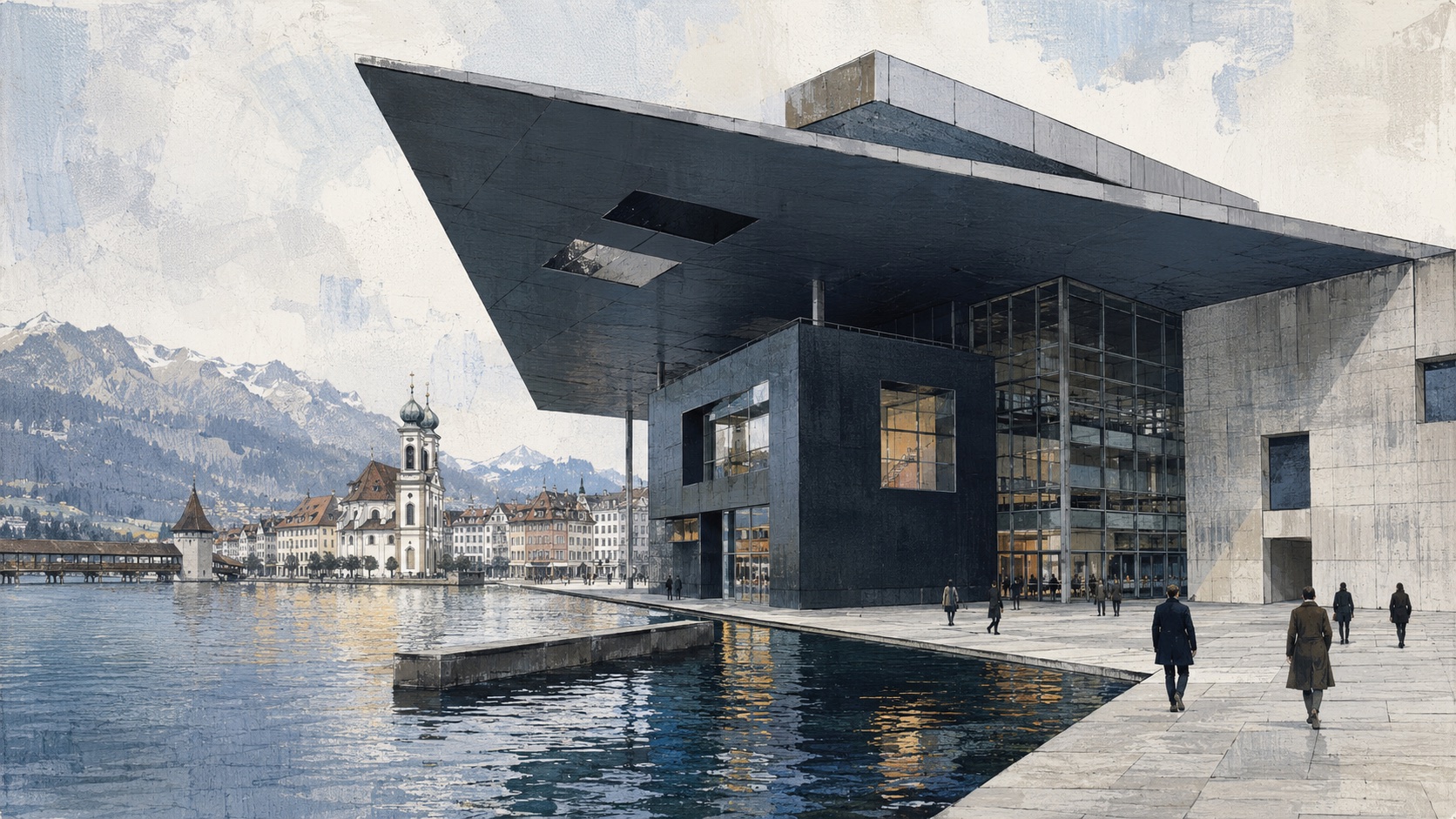
Jean Nouvel divided KKL into three parts with channels that carry lake water into the building. One wing holds the Concert Hall, another the Lucerne Hall, and the third the restaurants and Kunstmuseum. A single projecting roof gathers them at the shore.
The Concert Hall contains 24,000 plaster reliefs that scatter sound, adjustable echo chambers and a stage canopy used as a reflector. Its background noise measures only 18 decibels. Attend a concert when the programme allows. On any other day, enter for the Kunstmuseum and follow the water channels through the plan.
Lunch and dinner in the centre
Choose the room by the meal
These four addresses serve different purposes: a long French lunch, an old Lucerne Chinese dining room, a short Italian menu and cooking over charcoal.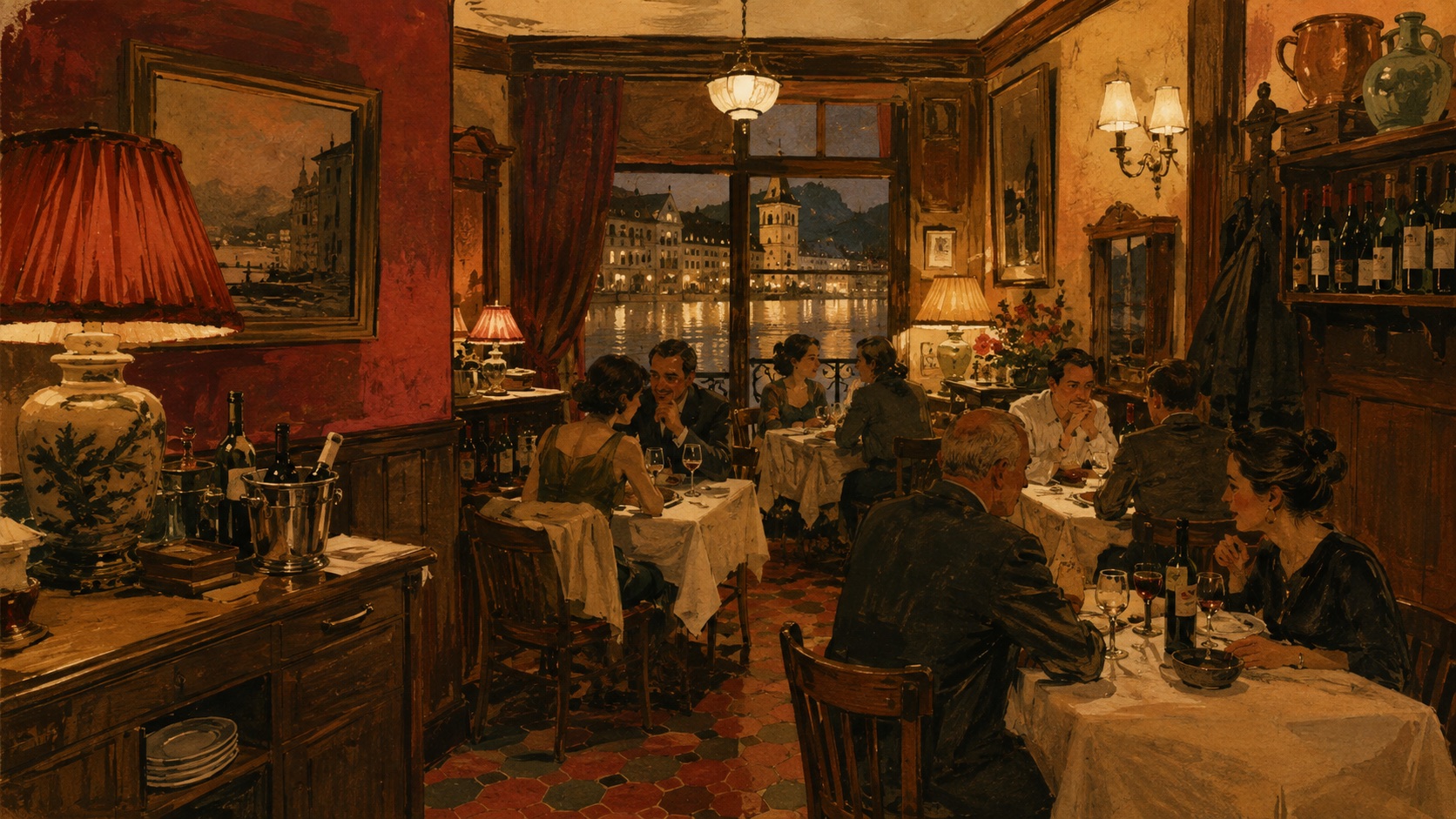 Brasserie BoduOrder the entrecôte and stay for the Bordeaux
Brasserie Bodu serves French food beside the Reuss. Its best-known dish is entrecôte de Paris; bouillabaisse, fish, oysters from Brittany and seasonal ingredients such as Cavaillon asparagus and morels give the menu a wider range than the room first suggests.
Bordeaux drives the wine list, and the sommelier can handle the pairing. Continuous daytime service makes Bodu useful for a late lunch after the old town crowds have peaked. For a first visit, order the entrecôte and leave enough time for the meal to move at the brasserie’s pace.
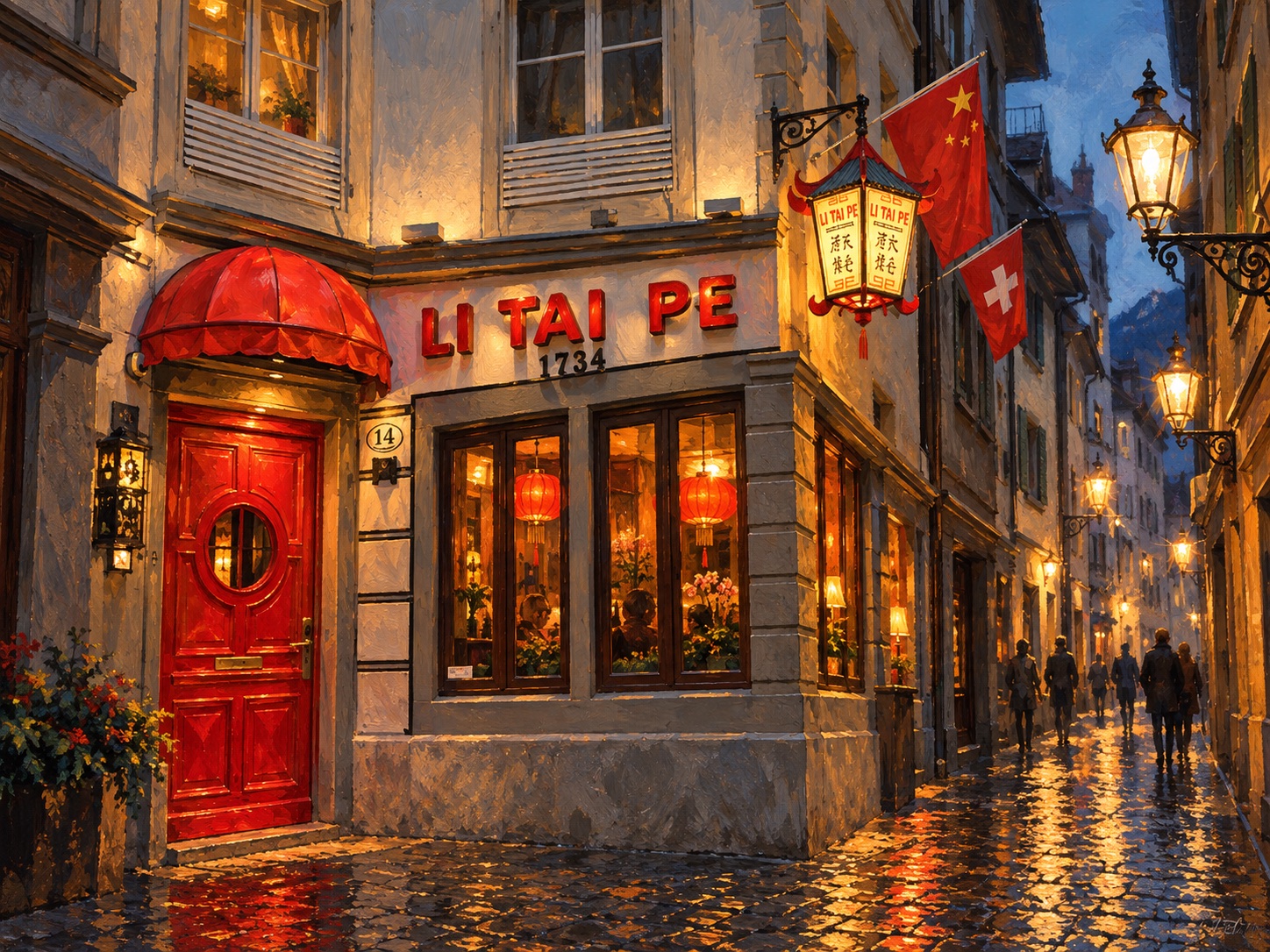 Li Tai PeReturn to the lacquer-red room Lucerne kept
Li Tai Pe belongs to an earlier chapter of international Lucerne. Its red interior, carved details and broad Chinese menu have the confidence of a restaurant that developed its character before dining rooms began changing identity every few years.
Come for the room as well as the food. Families, celebrations and repeat dinners have given it a local history that a newer address cannot reproduce. The pleasure lies in its continuity: a Chinese restaurant that has remained recognizably itself while the polished city around it keeps being restored.
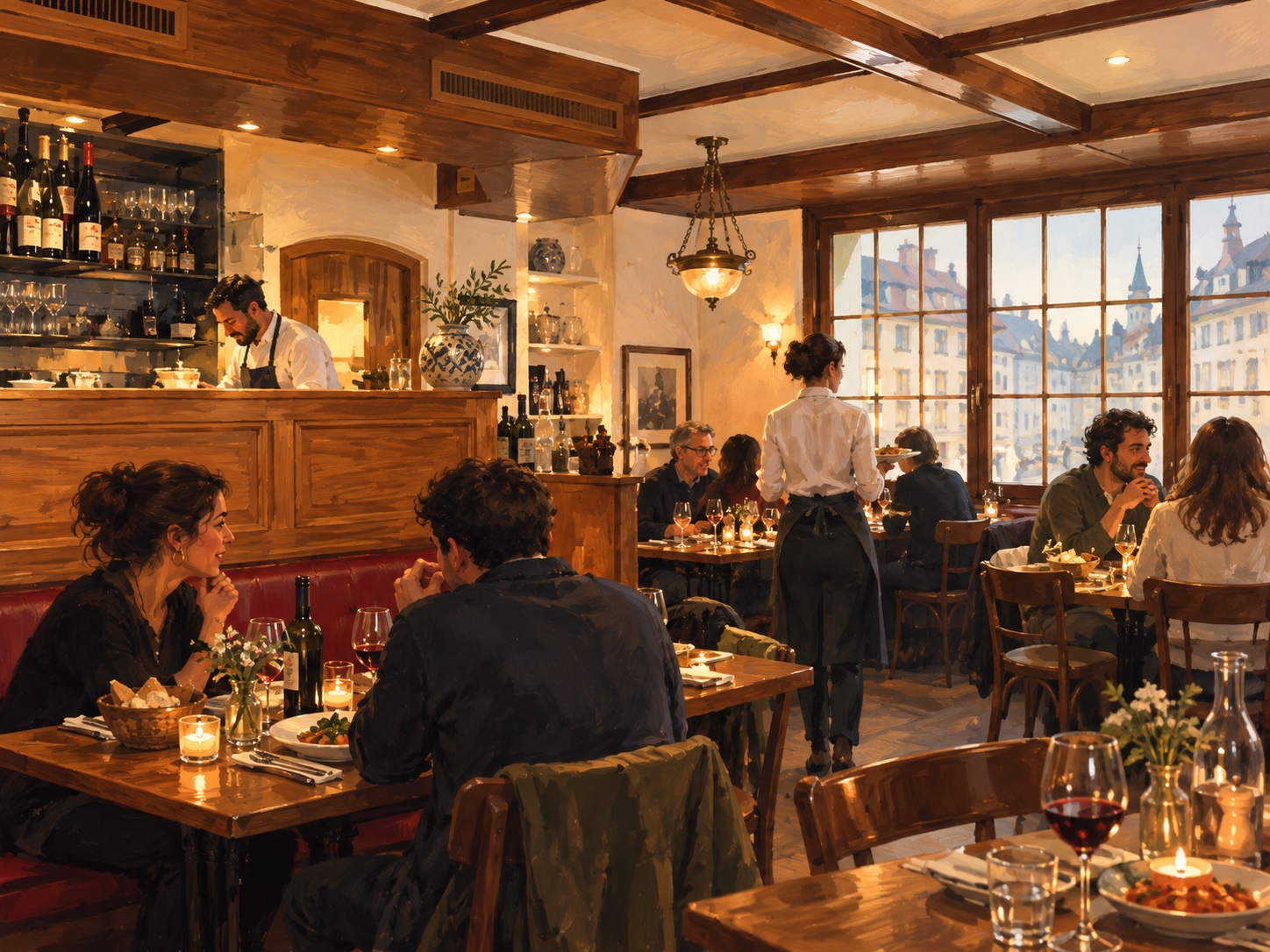 Tiglio OsteriaLet the short menu decide the meal
Tiglio works from a deliberately short menu: a handful of starters, several pastas, one meat dish, one fish dish and desserts. The food is made by hand and the selection changes with the season. The narrow choice asks you to trust the kitchen’s judgment.
The address has carried Italian cooking through changes of name and operator, giving the present Osteria a history longer than its current identity. Choose Tiglio for a quiet dinner and allow the pasta, the daily dishes and the people running the room to set the pace.
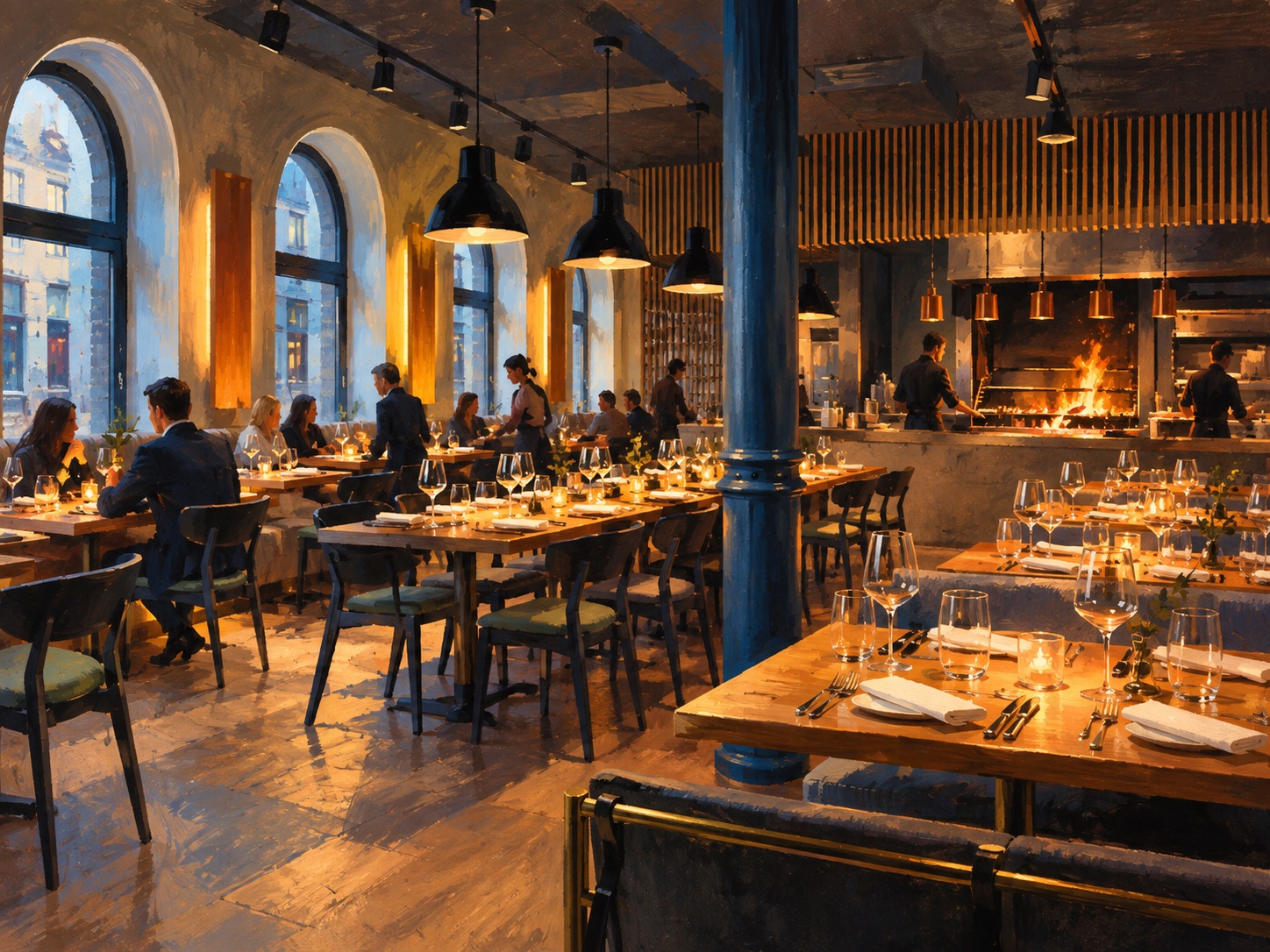 AmpersandThe charcoal grill sets the menu
Ampersand cooks over an open charcoal grill in Lucerne’s new town. Beef, chicken and sharing platters carry the menu, with recurring specials built around the same live-fire kitchen. The grill organizes both the kitchen and the meal.
This is the practical group dinner in the guide. Order across the grill, share sides and use the bar if people arrive at different times. A cigar lounge adjoins the restaurant for anyone who wants to extend the evening in that direction.
The principal stay beside the lake
Stay at the Palace
The Mandarin Oriental Palace places the lake outside the windows and Lucerne’s promenade at the door. This is the city’s complete grand-hotel experience.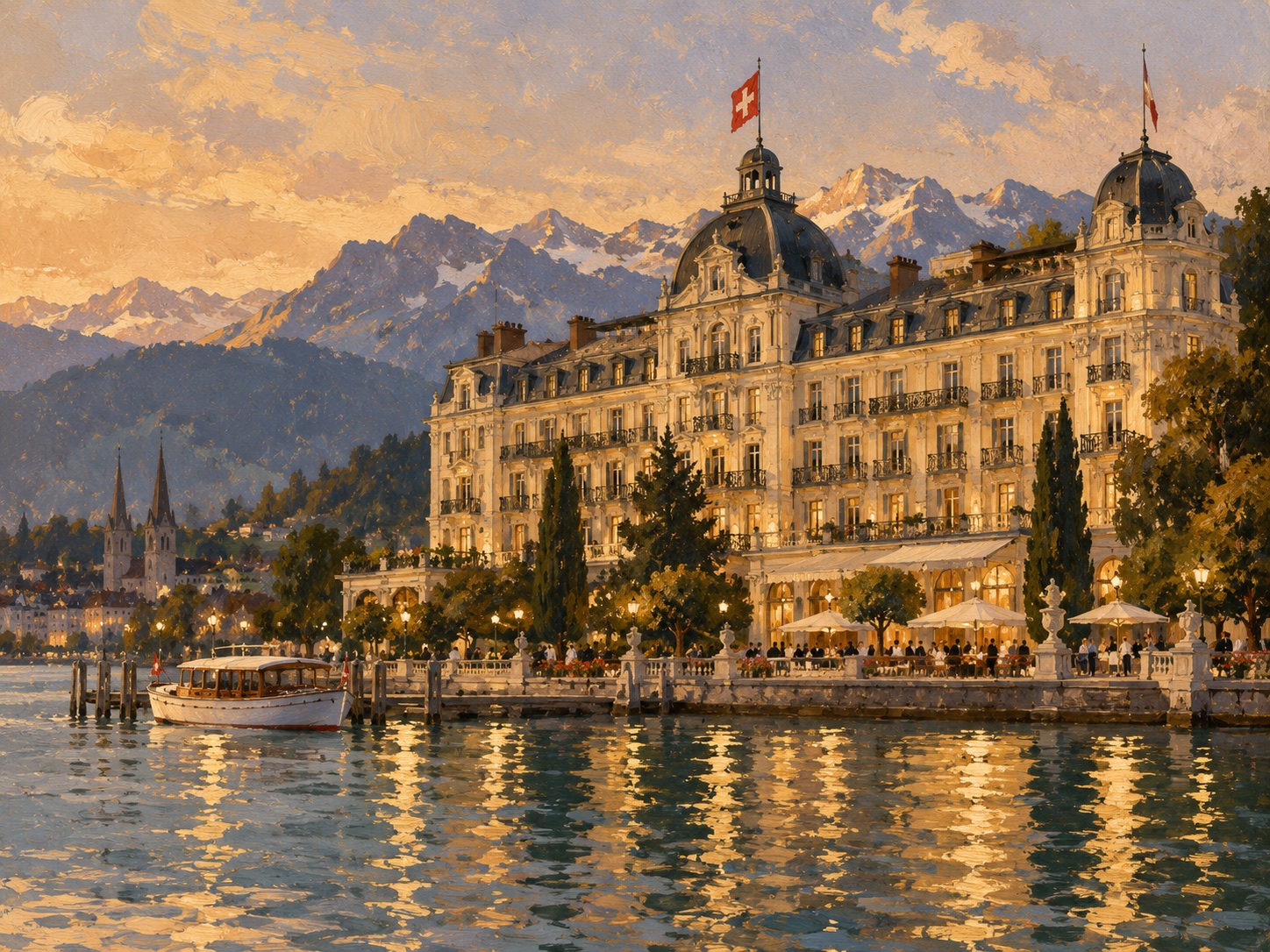 Mandarin Oriental PalaceWake beside the lake in Lucerne’s restored grand hotel
Franz Josef Bucher built the Palace Hotel on the lakeshore in 1906. It reopened as Mandarin Oriental Palace in 2022 after a restoration that retained the Belle Époque façade and surviving rooms such as Salon Alpine. Contemporary rooms now sit inside that historic shell, with the strongest ones facing across the water toward the mountains.
Stay here when the lake should remain part of the day after returning to the hotel. The promenade begins outside, boats move across the view and the old town remains within an easy walk. The Palace works because its scale never separates it from Lucerne: breakfast, the room and the evening light all keep the city and water close.
Three places that use the view differently
Drink above the roofs
Gütsch, the Montana and the Astoria place their bars at three different heights. The choice depends on whether you want a measured cocktail, a cigar with rum or a later rooftop evening.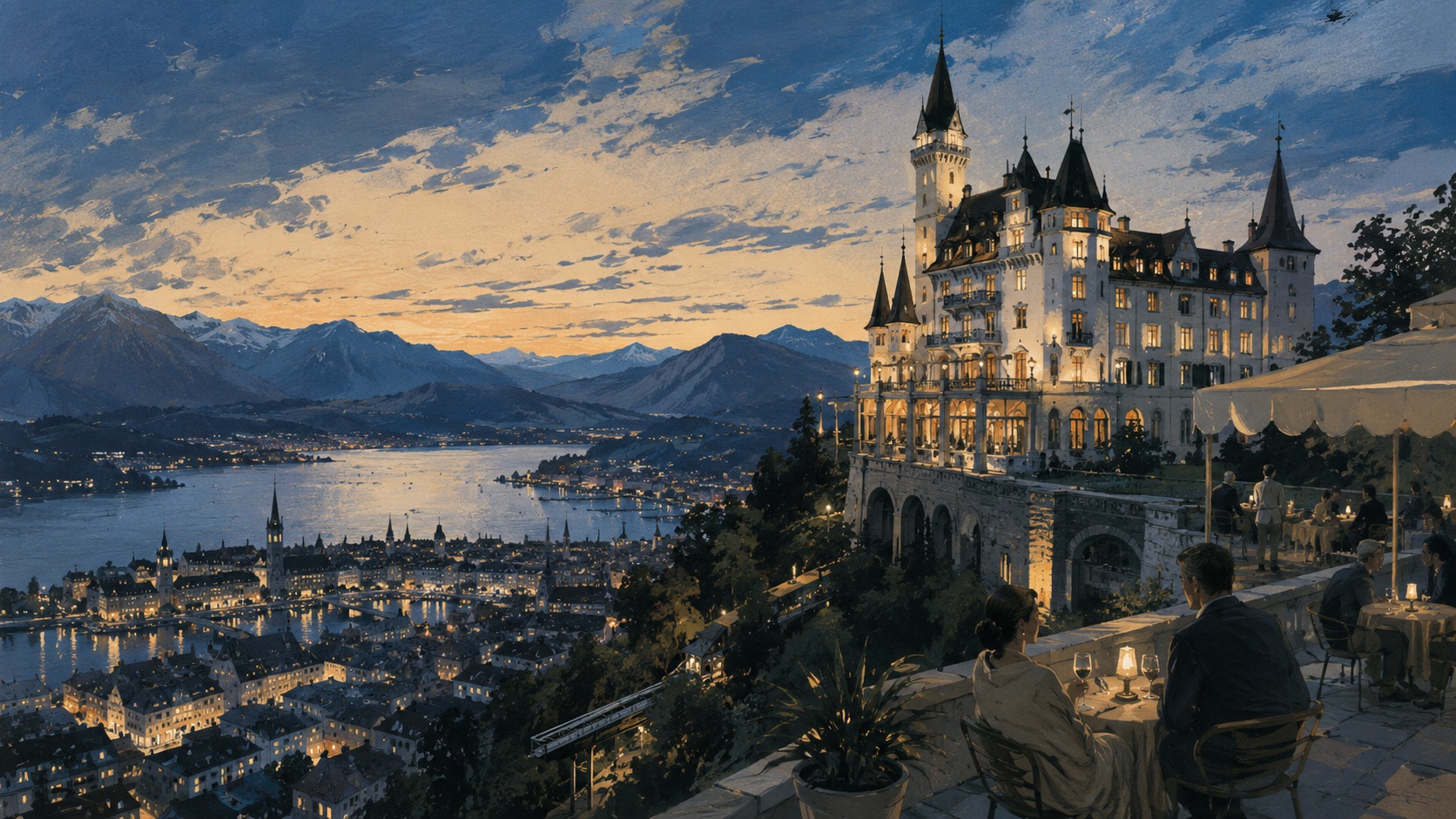 Château GütschRide the funicular up for one drink
The Gütsch funicular covers 170 metres of track and rises 90 metres in about a minute and a half. That short ascent is enough to pull the hotel away from the centre and open the view across the roofs, lake and mountains.
The American Bar opens from noon, and Restaurant Lumières serves a Swiss and Mediterranean menu. Use the bar for a single cocktail around sunset. Keep the visit to that drink unless you have booked Lumières for dinner.
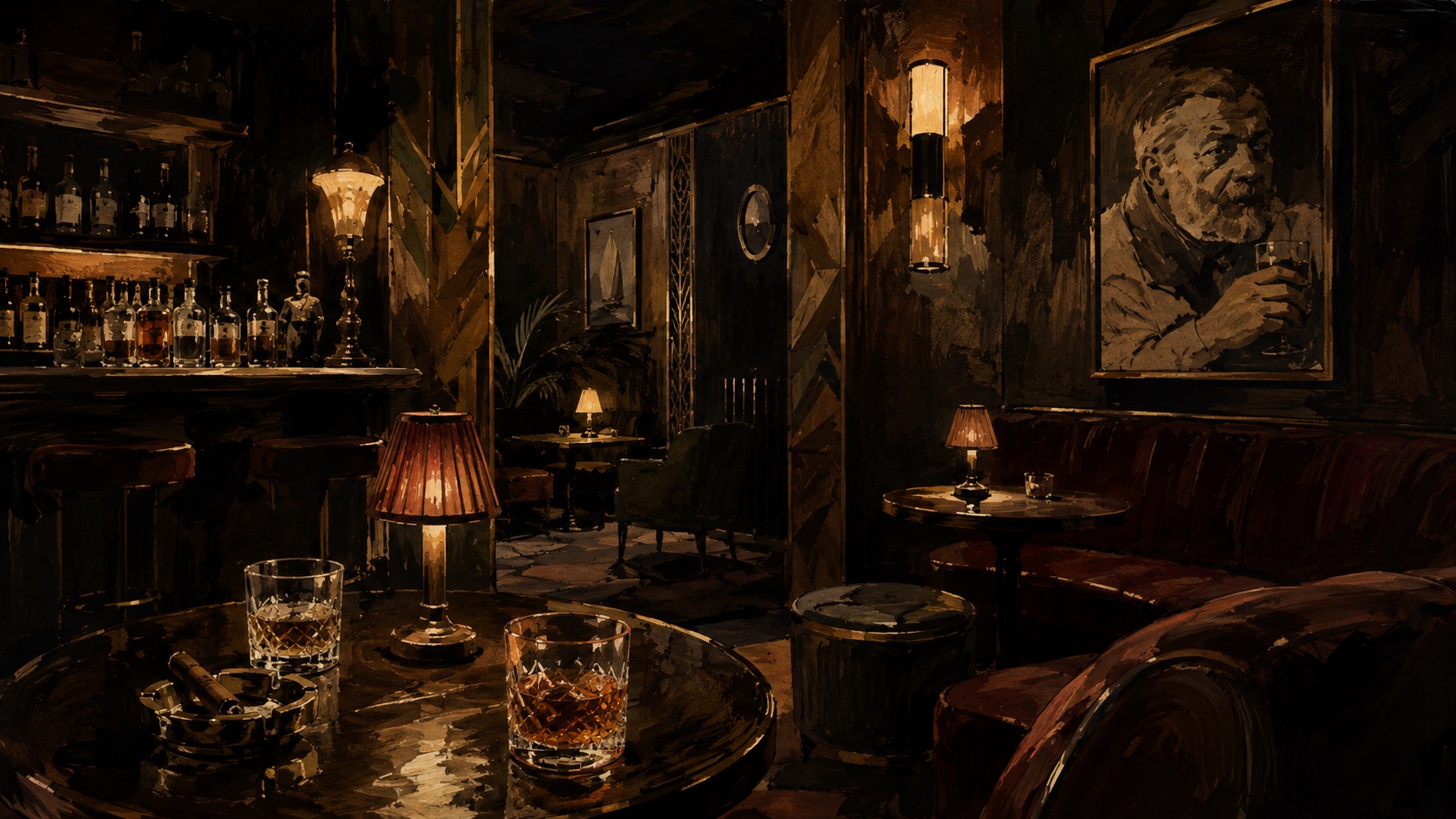 Hemingway Rum LoungeChoose this room only if cigar smoke belongs in the evening
The Hemingway lounge holds more than 60 rums from Central and South America, alongside a house bottling called Finest Montana Rum. It sits inside the Art Deco Hotel Montana and still looks across Lake Lucerne, despite the close, dark interior.
This is a fumoir, and cigar smoke is part of the room. Anyone who dislikes smoke should choose another bar. Rum drinkers who accept that condition will find the guide’s most focused drinks list here; the lounge stays open later on Friday and Saturday.
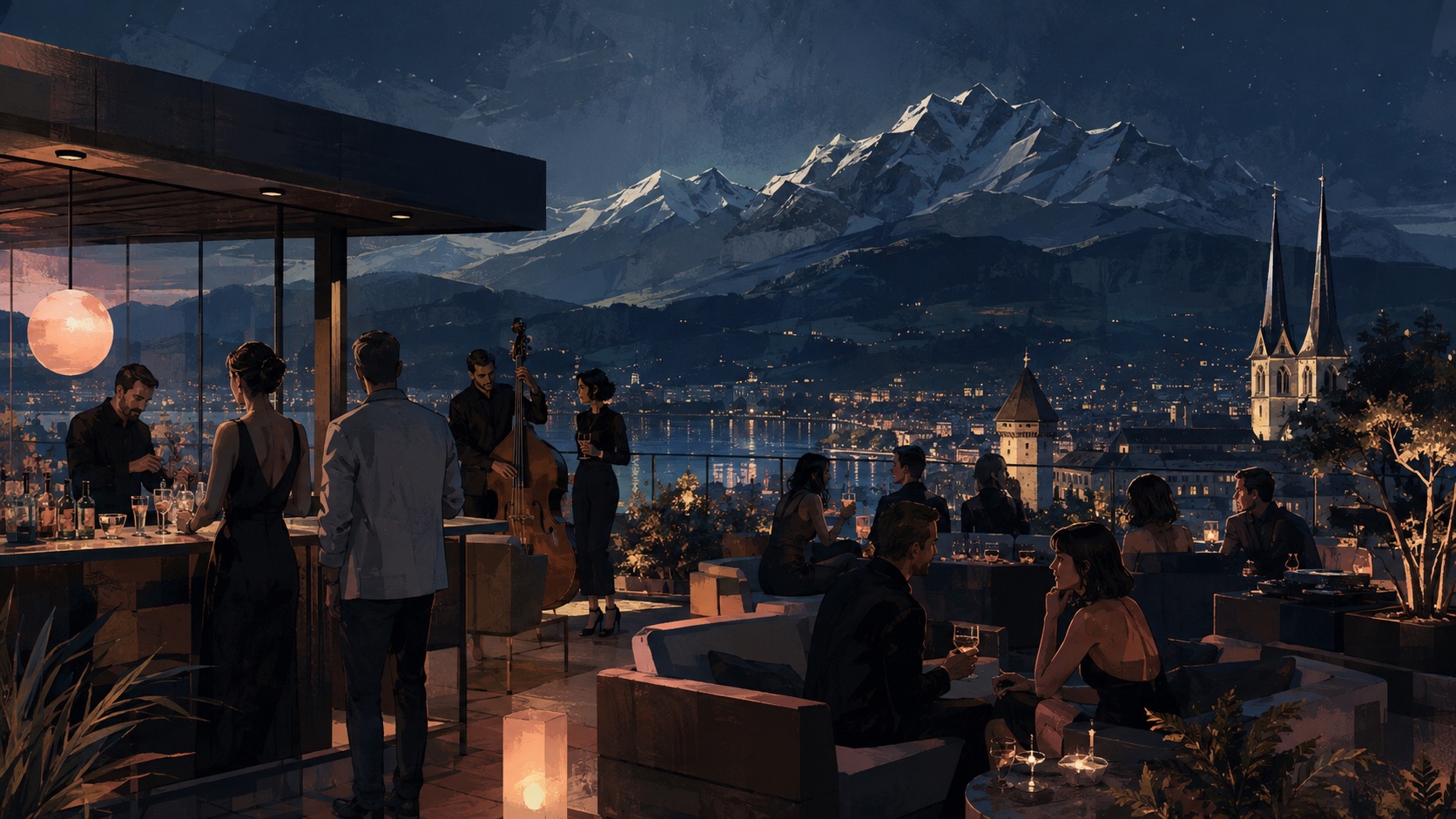 PenthouseUse the eighth floor for the later evening
Penthouse occupies the eighth floor of Hotel Astoria, with a rooftop terrace facing Lucerne and the Alps. The bar menu covers classic drinks, newer cocktails and aperitif variations, so the place works before dinner as well as later at night.
Friday and Saturday hours run until 3:30 in the morning, much later than the other bars in this guide. Arrive after the first drink elsewhere, reserve a table when the terrace matters and treat the view as part of a working late-night bar.
Two full-day routes from Lucerne
The city continues by boat and rail
Pilatus puts the mountain first. Bürgenstock leads to a resort and a cliff path. Both journeys begin close to the railway station and depend on their timetables.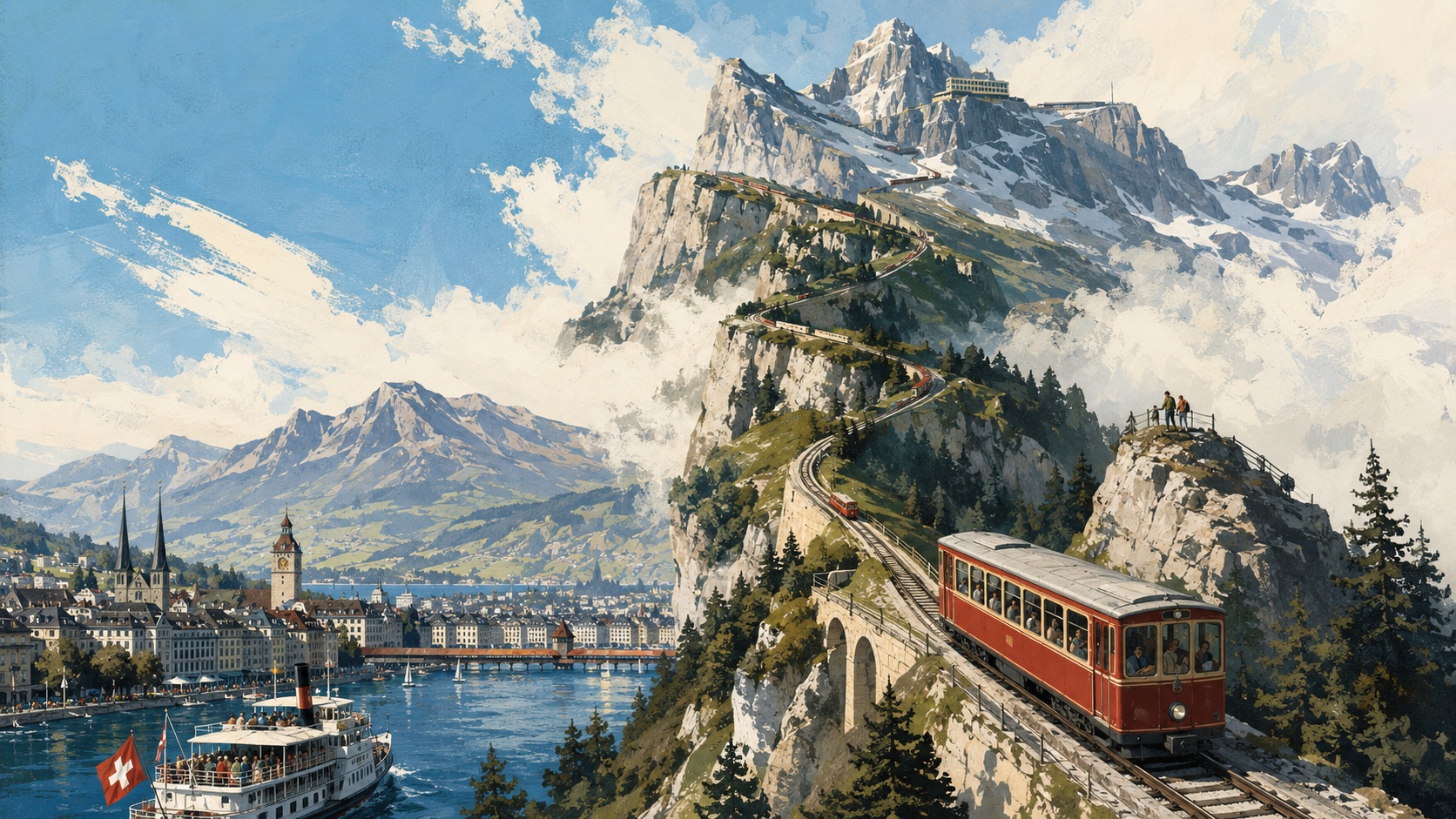 Mount PilatusClimb by cableway, descend by train and come home across the lake
Start in Kriens and save the lake for the return.
Take bus 1 from Lucerne station to Kriens, then walk five to ten minutes to the valley station. Panorama gondolas rise through Krienseregg to Fräkmüntegg, where the aerial cableway takes over for the final climb to Pilatus Kulm. This direction lets the landscape build gradually: the city falls away, the forest closes around the gondola and the bare rock finally fills the windows.
Give the summit enough time to feel its scale.
At 2,128 metres, Lake Lucerne breaks into long blue arms below the ridge and the Alps run across the horizon. The Oberhaupt viewpoint takes about ten minutes, the Dragon Path about twenty and the Esel around thirty. The flower trail to Tomlishorn, the highest point in the Pilatus range, needs roughly ninety minutes. Restaurant Bellevue is useful for a quick Swiss lunch with the view; Restaurant Pilatus-Kulm has served guests in its historic rooms since 1890.
Take the cogwheel railway down through the rock.
The descent to Alpnachstad lasts about thirty-three minutes and drops 1,635 metres over 4.6 kilometres. The line reaches a gradient of 48 percent, held by Eduard Locher's system of horizontal cogwheels gripping both sides of a central rack. It has worked here since 1889. The carriage moves from exposed stone to alpine meadow with almost no pause between them. Reserve a seat on clear, busy days; this train is the mechanical and visual climax of the route.
Finish the day on the water.
An underground passage links the railway with the landing stage at Alpnachstad. From there, the boat crosses the lake and returns to the pier opposite Lucerne station. Mountains that felt severe at the summit settle back into the city's skyline as the boat approaches. The complete Golden Round Trip runs in the warmer months, generally from May to October. Check the boat and railway timetables together, and carry a warm, windproof layer even when Lucerne feels mild.
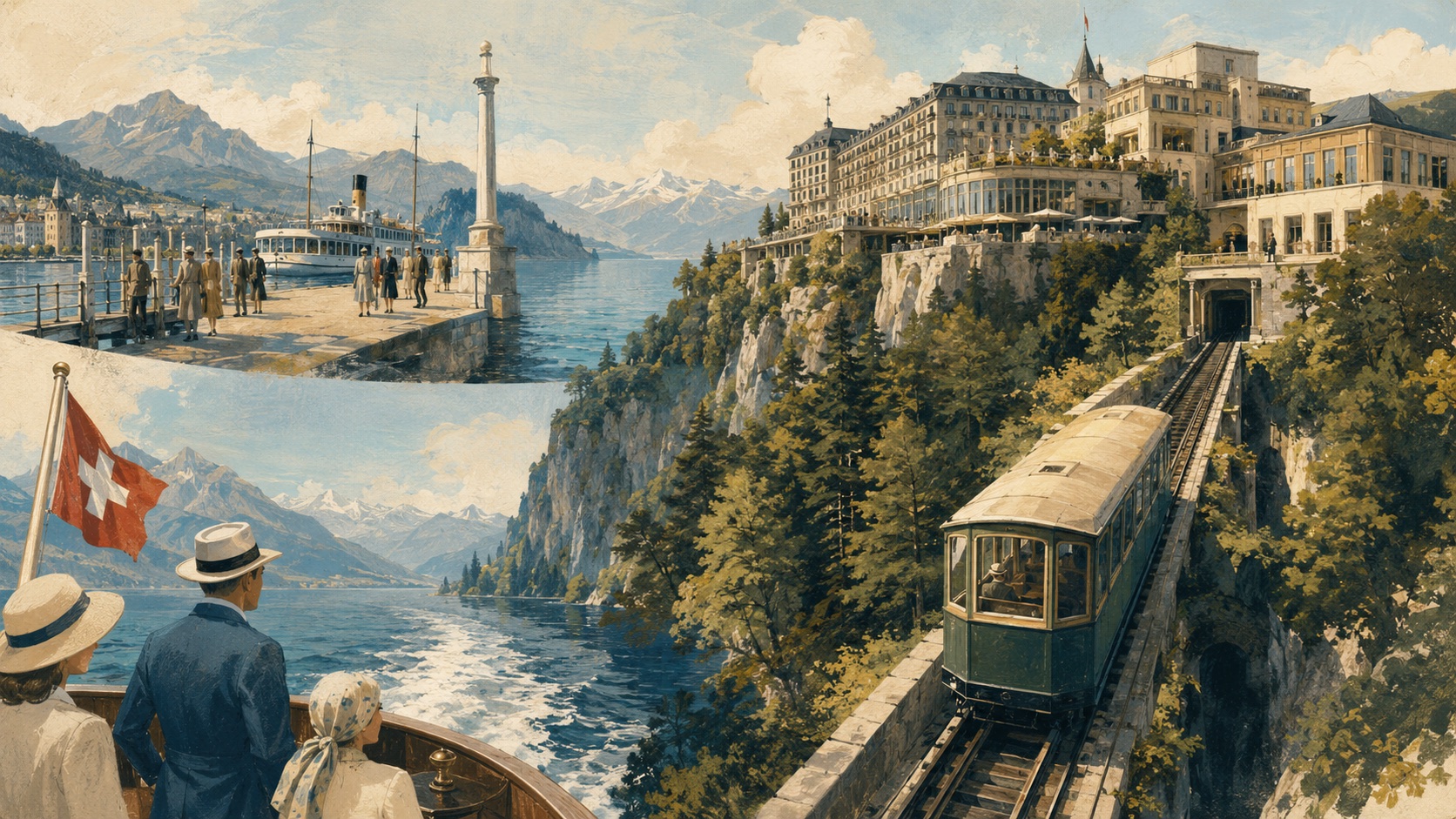 BürgenstockCross the lake, climb into the resort and stay for its second act
Let the boat and funicular stage the arrival.
The catamaran leaves beside Lucerne station and reaches Kehrsiten-Bürgenstock in about twenty-five minutes. The city recedes across the water before a vintage funicular climbs 500 metres from the landing stage to the ridge. Lake, railway and hotel appear as one continuous piece of theatre. Sit where you can see the shore on the boat, then move to the lower side of the funicular for the widening view behind the carriage.
Read the resort as a small town on the ridge.
Bürgenstock has occupied this improbable position since 1873. Its sixty hectares hold grand old buildings, sharp contemporary wings, wooded paths, restaurants and a spa suspended above Lake Lucerne. The mix gives the place its particular coolness. A polished hotel corridor can open onto a century-old terrace, then onto a path where the lake is suddenly 500 metres below. Few resorts make the journey, architecture and landscape feel so completely joined.
Choose between warm water, cigar smoke and the cliff edge.
A booked day-spa visit opens the 10,000-square-metre Alpine Spa, with indoor and outdoor pools, saunas, a hammam and the infinity pool facing Pilatus and the lake. The Lakeview Bar & Cigar Lounge offers a slower indoor version of the same panorama with cocktails, afternoon tea and cigars. In dry weather, take the Felsenweg toward the Hammetschwand Lift. The outdoor lift rises 153 metres in about a minute and operates only when conditions allow.
Stay for a meal after the day visitors begin to leave.
Spices Kitchen & Terrace moves among Japanese, Chinese, Indian and Thai cooking with the lake spread beyond the glass. Parisa gives the evening a richer Persian table, while Verbena suits a lighter meal. The Lakeview Bar works for one final drink when dinner would make the return too tight. Reserve the spa and the restaurant in advance, then check the last boat and funicular as a pair. The resort feels most singular when there is time to watch it change from bright terrace to lit windows above a dark lake.