Destination
Japan
Tokyo
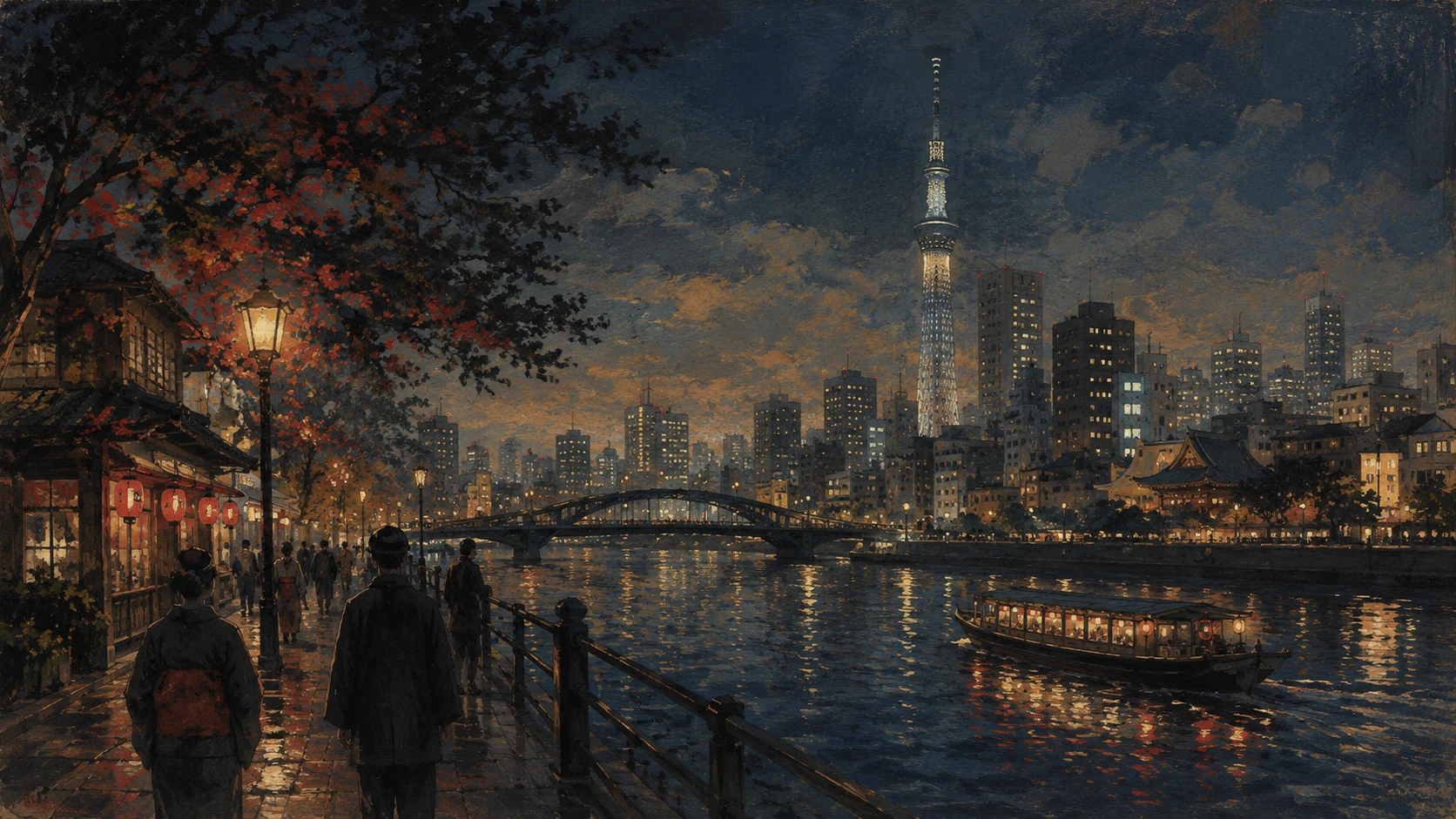
Japan
Places to know
10 places
The Okura Tokyo
Toranomon · 2-10-4 Toranomon, Minato City
The Okura has absolute certainty about what it is. The famous 1960s lobby was demolished, mourned, then painstakingly reconstructed inside the new building: lanterns, low chairs and geometric screens beneath a tower that otherwise belongs completely to contemporary Tokyo. The reconstructed room carries the proportions and stillness of the old hotel into the new one. Stay for that tension, the immaculate service, breakfast downstairs, the hushed hallways, the swimming pool above Toranomon and the strange pleasure of returning at night to a hotel that feels almost aggressively composed. Tokyo can overwhelm through abundance. The Okura offers control.
La Bisboccia
Hiro-o · 2-36-13 Ebisu, Shibuya City
La Bisboccia is an old-school Italian restaurant in Hiroo with white tablecloths, waiters who decided several decades ago how a proper dining room should operate and enormous wheels of cheese moving around the room. Pasta, bistecca, wine and noise give the place a transported quality. Tokyo is extraordinary at rebuilding foreign things in its own image; La Bisboccia feels as though the city left this one alone. Go when dinner needs to be Italian.
Inakaya
Roppongi · 3-14-7 Roppongi, Minato City
Dinner arrives on a wooden paddle approximately the length of a small fishing vessel. Inakaya takes robatayaki, fish, meat and vegetables grilled in front of you, and turns the delivery system into theatre. You point at what you want. It hits the grill. Then someone on the other side of the counter launches it across the room on a giant paddle. The ridiculousness is deliberate and communal; half the room participates each time another order makes the crossing. Inakaya is for the night when nobody wants subtlety. Order too much, drink sake, shout across the counter and accept that your mushrooms will be arriving by oar.
Super Potato
Akihabara · 1-11-2 Sotokanda, Chiyoda City
Super Potato can turn the purchase of an old Nintendo DS into an archaeological expedition. The shop is stacked vertically with the physical remains of Japanese gaming: Game Boys, Famicoms, cartridges, boxed consoles, things you owned at eight years old and things you had forgotten existed entirely. The games are not merely old; they still feel culturally alive here. You begin by looking for one console. Twenty minutes later you are comparing regional packaging for games you do not even play. It is Akihabara in concentrated form.
XEX
Roppongi · 7-21-19 Roppongi, Minato City
The first Tokyo dinner should not necessarily be the most important one. Sometimes you have just landed, nobody understands what time it is, and the city is sitting outside the window daring you to stay awake. XEX is useful precisely then. Big room, big view, Italian food, cocktails, Roppongi glowing underneath. It is Tokyo operating at cinematic scale before you have had time to understand any of it properly. There are restaurants worth crossing Tokyo for. This is a restaurant worth arriving in Tokyo to.
The Tokyo Station Hotel
Marunouchi · 1-9-1 Marunouchi, Chiyoda City
One of the great tricks in Tokyo is that one of its best hotels is hiding inside its busiest railway station. Not beside it. Not overlooking it. Inside the enormous red-brick Marunouchi building itself. The experience is wonderfully contradictory. Outside the room: platforms, commuters, underground passages, bullet trains leaving for the rest of Japan. Inside: high ceilings, quiet corridors, old European proportions and the strange calm of being protected from all of it. Having stayed here makes Tokyo Station permanently different afterwards. It stops being infrastructure and becomes a place. That may be the hotel's greatest luxury.
Uogashi Nihon-Ichi
Shimbashi · 3-21-10 Shimbashi, Minato City
Stand up and eat. That is essentially the arrangement. Uogashi Nihon-Ichi strips sushi down to the useful parts: a narrow counter, chefs directly in front of you, pieces ordered individually, eaten immediately, then replaced by another. No ceremony needs to be manufactured because the rhythm is already enough. The Shimbashi branch is particularly right for Tokyo because of where it sits: in the middle of one of the city's great zones of office workers, railway lines, izakayas and post-work drinking. You can spend extraordinary amounts of money on sushi here. You should also experience what happens when Tokyo treats very good sushi as fast food.
Golden Gai
Kabukicho · 1-1-6 Kabukicho, Shinjuku City
Tokyo occasionally needs to stop making sense. Golden Gai helps. Six tiny alleys in Shinjuku packed with bars that can sometimes accommodate fewer people than a taxi. Stairs disappear upward. Doors reveal rooms the size of cupboards. Every bar appears to have developed its own constitution. The mistake is treating Golden Gai as something to photograph. Go inside. Find one with space. Order something. Stay longer than intended. Then leave and try another. Its reputation has become international; the physical experience remains wonderfully absurd.
Don Quijote
Shibuya · 28-6 Udagawacho, Shibuya City
A shop for absolutely everything and therefore, inevitably, for something you suddenly desperately need at 10:47 p.m. Cosmetics. Electronics. KitKats. Socks. Luggage. Watches. Costume accessories. Household supplies. Things whose purpose remains unclear even after inspection. On this trip it became the emergency solution for an additional suitcase after Tokyo shopping had exceeded available baggage capacity, which is almost certainly one of Don Quijote's principal functions within the Japanese economy. The stores are chaotic in a country famous for order. Go in for one thing. This has never once worked.
Itoya
Ginza · 2-7-15 Ginza, Chuo City
Twelve floors devoted to the proposition that stationery deserves considerably more attention than most societies give it. Itoya in Ginza is notebooks, pens, paper, cards, inks and desk objects presented with the seriousness normally reserved for watches or jewellery. Even people who claim not to care about stationery begin touching paper. That is the trap. Tokyo is very good at elevating ordinary objects through obsessive specialization. Itoya may be the cleanest possible expression of it: a pencil is never merely a pencil if enough thought has gone into the pencil.