Destination
Mexico
Oaxaca
Mexico
Places to know
4 places
Los Danzantes
Centro · Macedonio Alcalá 403, Interior 4
A pool runs through the dining room at Los Danzantes. High walls, open sky, stone, plants, fire and water make the place feel less decorated than excavated from some calmer version of Oaxaca. The food is just as deliberate: five moles on one plate, quelites, hoja santa, quesillo, chiles that refuse supporting roles and vegetables grown at the restaurant's regenerative farm fifteen kilometres away. The mezcal is not a branded afterthought either. Los Danzantes has its own distillery in Santiago Matatlán and has been sufficiently obsessive about agave to create an entire second institution around it. The farm, mezcal, design and cooking all belong to the same project. Oaxaca takes itself seriously here because it has earned the privilege.
Casa Oaxaca
Centro · Calle de la Constitución 104-A
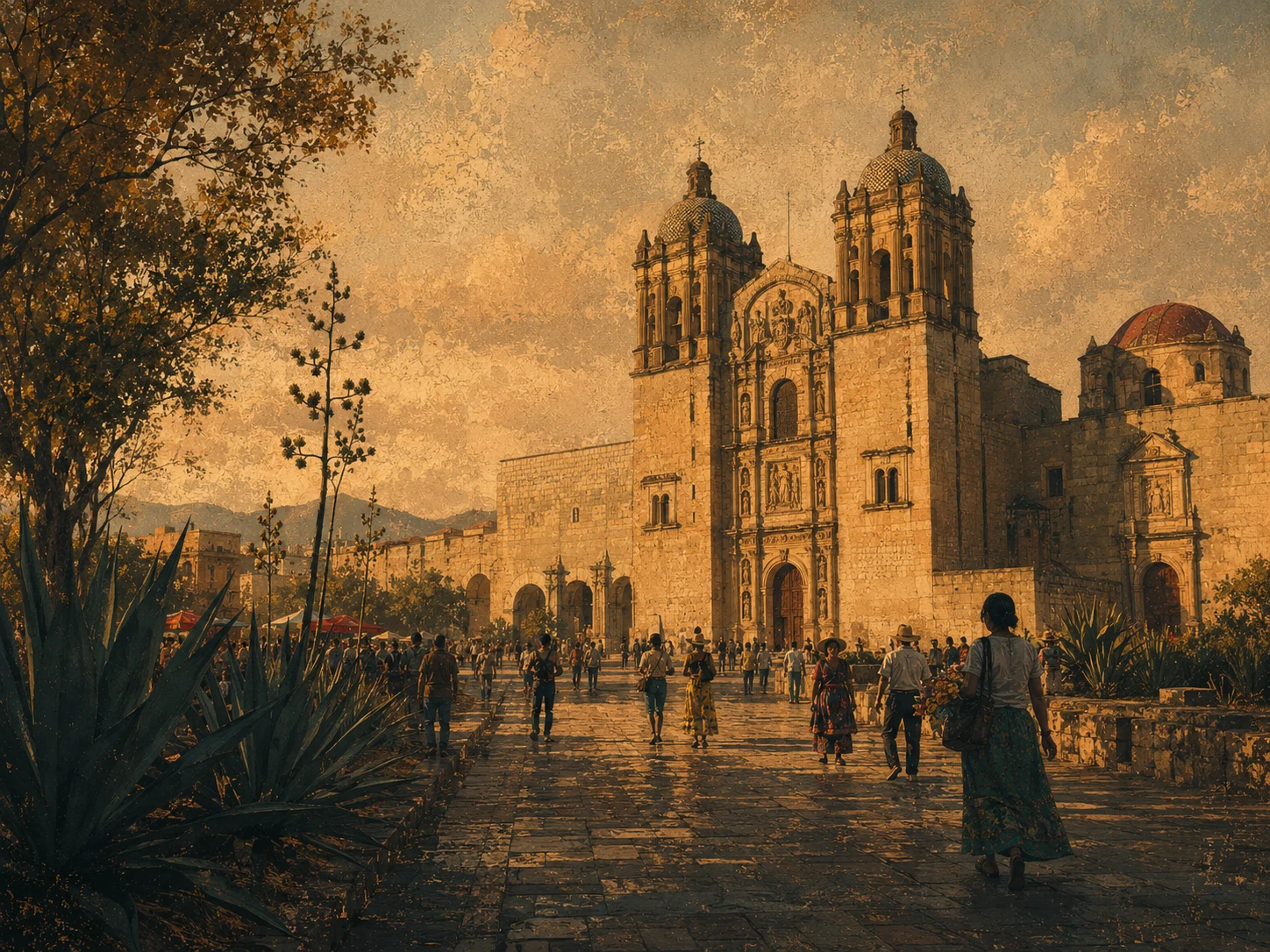
At Casa Oaxaca, someone arrives at the table with a molcajete and makes the salsa in front of you: tomato, chile, garlic and whatever combination is appropriate that day, crushed while you wait. It is a small piece of theatre, but useful theatre. Before anyone starts discussing contemporary Oaxacan gastronomy, the meal begins with one of the oldest and most basic pieces of kitchen equipment in Mexico being used exactly as intended. Alejandro Ruiz's cooking can be much more polished than that, with moles, herbs, local vegetables, duck, rabbit and ingredients gathered from across the state, but Casa Oaxaca never loses the connection. Upstairs, the terrace opens over Centro and toward the domes around Santo Domingo, and dinner becomes increasingly difficult to separate from the warm stone city around it. Its fame follows from the cooking and the city surrounding it.
Pitiona
Centro · Ignacio Allende 114
Pitiona is named after an herb. This is already more charming than naming a restaurant after an abstract noun. José Manuel Baños cooks from memory but seems incapable of leaving the memory alone. Oaxacan ingredients remain recognizable while shapes, temperatures and techniques get rearranged around them; the pleasure is catching something deeply familiar after the plate has spent several minutes pretending otherwise. Then there is the roof. From the terrace, Pitiona claims views of seven of Oaxaca's principal churches, which is an unnecessarily strong concentration of domes for one dinner. Have a cocktail up there before worrying about what category of Oaxacan cooking this represents. The churches have managed several centuries without the category. You can manage twenty minutes.
El Pasillo de los Tasajos
Mercado 20 de Noviembre · Pasillo de Humo
You will smell it before you have made any decisions. Smoke fills the narrow passage. Long strips of tasajo and cecina hang from stalls. Chorizo glows red. You point at meat, somebody cuts it, somebody else puts it over charcoal, and the meal begins assembling itself across several businesses rather than arriving from one kitchen. This is important: there is no restaurant to understand. Buy the meat here. Tortillas somewhere else. Onions and chiles join the grill. Find a place to sit. Somebody appears with something you forgot you needed. Smoke gets into your clothes and remains there as documentary evidence. The Pasillo de Humo inside Mercado 20 de Noviembre is messy, modular, loud and extremely efficient at the only thing that matters. Choose meat. Apply fire. Oaxaca has already completed the difficult part.