Destination
France
Cannes
France
Places to know
5 places
Chez Vincent et Nicolas
Meynadier / Marché Forville · Rue Meynadier 92
Chez Vincent et Nicolas sits on Rue Meynadier near Marché Forville, in the denser, more everyday part of Cannes behind the Croisette. The restaurant serves traditional French and Mediterranean food in a warm room that feels removed from festival spectacle and beach-club choreography. Its usefulness is contrast. Cannes needs at least one address where dinner is organized around familiar cooking, conversation and the old commercial streets rather than sea views or visible glamour.
La Guérite
Île Sainte-Marguerite · Cove below Fort Royal
Lunch begins with a boat leaving Cannes. La Guérite sits in a rocky cove on Île Sainte-Marguerite, where a restaurant has existed in some form since 1902. Yiannis Kioroglou, the Athenian chef who has led the kitchen since 2013, cooks Mediterranean food over fire: whole fish, grilled vegetables, Greek references, herbs, olive oil and large things intended to be shared. Pine trees, rock and water fill the view. As lunch continues, the music rises, tables get louder and bottles appear with increasingly theatrical delivery methods. People who arrived for a civilized island lunch begin standing on furniture. Several hours later, a boat takes everybody back to the mainland, a useful arrangement because walking home would now be difficult for multiple reasons. It is expensive, ridiculous and extremely Cannes. The crossing back is part of it: sea air, decreasing volume, mainland approaching, evidence gradually returning.
La Petite Maison Cannes
Palm Beach · Place Franklin Roosevelt
La Petite Maison has never suffered from false modesty. Tomatoes arrive as though tomatoes have a publicist. Artichokes, pissaladière, grilled fish, truffle eggs and the whole sunny Niçoise vocabulary assume that good olive oil and an expensive table are perfectly capable of coexisting. The Cannes branch occupies Palm Beach at the far end of the Croisette, looking from Cap d'Antibes across to the Lérins Islands. The location carries its own absurd history: Palm Beach opened in 1929 as Europe's first summer casino, hosted Churchill, the Duke of Windsor and half the mythology of the Riviera, was bombed during the war, rebuilt, then reopened in 2024 after a five-year renovation reported at €250 million. La Petite Maison is now one of the restaurants inside the resurrected pleasure machine. Get the tomatoes. Get fish. Sit where the Mediterranean occupies an unreasonable percentage of the field of vision. Cannes has arranged the spectacle already.
La Môme
Carré d’Or · Rue Florian 6
Rue Florian has effectively been annexed. On one side, La Môme serves Mediterranean food with glamour and DJs in a room that began in 2015 as a small restaurant between friends. Across the way at No. 5, Midô takes the same social instinct in another culinary direction: sushi, crudo, tempura and robata through a Nikkei vocabulary of Japanese precision and South American excess. The Lecorché brothers run both and now preside over a small La Môme universe that also includes Môka nearby. Midô is darker and more intimate; La Môme is louder and more Mediterranean. The two sides of Rue Florian function like rooms of the same restaurant, separated by a few steps and an inadequate respect for property lines.
Hôtel Martinez
La Croisette · 73 Boulevard de la Croisette, 06400 Cannes
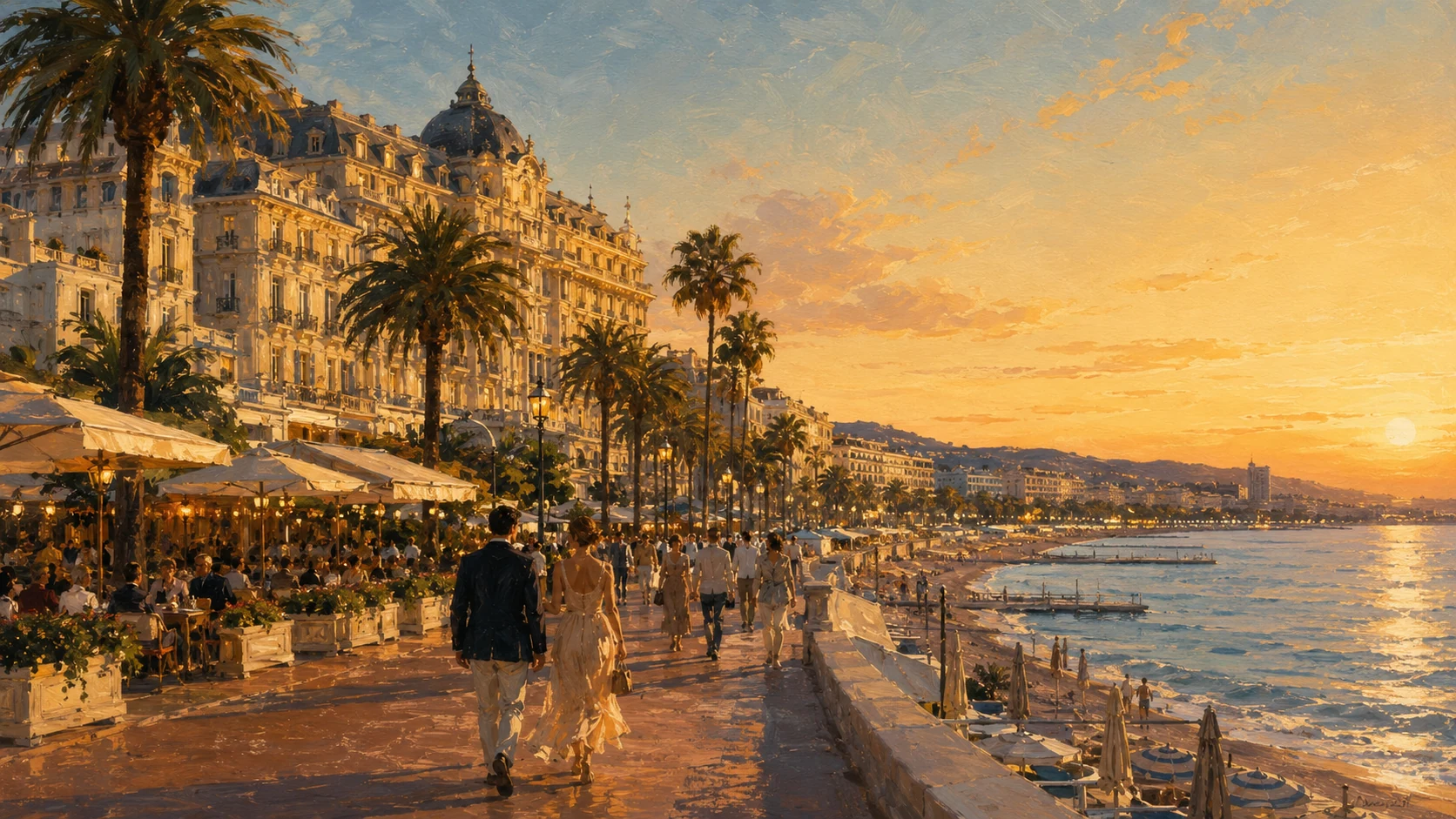
Emmanuel Martinez bought the Villa Marie-Thérèse on the Croisette in 1927, demolished it and announced that he would build the largest hotel on the Côte d'Azur. Fourteen months later he opened it. This is the correct speed for unreasonable confidence. The resulting seven-storey Art Deco building stretched almost a hundred metres along the Croisette and opened in February 1929, immediately joining the small group of hotels that helped turn Cannes from a pleasant Mediterranean town into a stage set for international glamour. When the film festival arrived after the war, the Martinez became one of its natural headquarters; actors, producers, aristocrats, politicians and people whose principal occupation was being seen passed through the same enormous frontage. The important thing is that the hotel remains part of the street rather than merely accommodation behind it. Its white façade is one of the Croisette's defining objects. During the festival the lobby becomes a barely governable meeting place. Outside festival week, you can actually notice the architecture, the beach and the spectacular confidence with which the entire building faces the Mediterranean. Cannes has plenty of hotels. The Martinez is part of the costume.